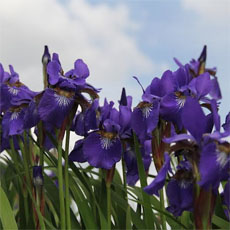
Japanese Water Iris, Japanese Flag, Russian Iris 'Pleasant Sandman'

Iris ensata

Family
Iridaceae (eye-rid-AY-see-ee)
Genus
Iris (EYE-ris)
Species
ensata (en-SA-tuh)
Synonym
Iris kaempferi
Hybridized
Harris
Registered or introduced
1997
Height
36-48 in. (90-120 cm)
Spacing
15-18 in. (38-45 cm)
18-24 in. (45-60 cm)
Hardiness
USDA Zone 5a: to -28.8 °C (-20 °F)
USDA Zone 5b: to -26.1 °C (-15 °F)
USDA Zone 6a: to -23.3 °C (-10 °F)
USDA Zone 6b: to -20.5 °C (-5 °F)
USDA Zone 7a: to -17.7 °C (0 °F)
USDA Zone 7b: to -14.9 °C (5 °F)
USDA Zone 8a: to -12.2 °C (10 °F)
USDA Zone 8b: to -9.4 °C (15 °F)
USDA Zone 9a: to -6.6 °C (20 °F)
USDA Zone 9b: to -3.8 °C (25 °F)
Sun Exposure
Full Sun
Danger
Parts of plant are poisonous if ingested
Handling plant may cause skin irritation or allergic reaction
Bloom Color
Pale Yellow
Blue-Violet
White/Near White
Foliage
Herbaceous
This plant is resistant to deer
Smooth
Class
Japanese (JI)
Bloom Time
Late (La)
Other Details
Other details
Propagation Methods
By dividing rhizomes, tubers, corms or bulbs (including offsets)
Seed Collecting
N/A: plant does not set seed, flowers are sterile, or plants will not come true from seed
Soil pH requirements
5.1 to 5.5 (strongly acidic)
5.6 to 6.0 (acidic)
6.1 to 6.5 (mildly acidic)
Patent Information
Non-patented
Awards (if applicable)
Honorable Mention
Foliage Color
Blue-Green
Bloom Characteristics
This plant is attractive to bees, butterflies and/or birds
Water Requirements
Requires consistently moist soil; do not let dry out between waterings
Very high moisture needs; suitable for bogs and water gardens
Where to Grow
Can be grown as an annual
Regional

This plant is said to grow outdoors in the following regions:

Vancouver, Washington

Featured Videos

Gardener's Notes:

0
positive
1
neutral
0
negative
Sort By:
Sort By:
J
J
Belfield, ND (Zone 4a) | October 2008 | neutral

Awards: Honorable Mention 2002

Featured
Lagerstroemia'Catawba'
(Lagerstroemia indica)
Pyralid Moth
(Vinicia gypsopa)
Great Blue Heron
(Ardea herodias)
Featured
Lagerstroemia'Catawba'
(Lagerstroemia indica)
Pyralid Moth
(Vinicia gypsopa)
Great Blue Heron
(Ardea herodias)